Wellness is often misunderstood as perfection, productivity, or constant improvement. But for people living with disabilities, chronic illness, or long-term caregiving responsibilities, wellness looks different. It is quieter. More intentional. More compassionate.
At its core, wellness is not about fixing what is broken — it is about learning how to live well within the reality we have, while honoring our body, mind, spirit, and purpose.
For me, wellness is deeply connected to faith. It is rooted in the belief that God meets us where we are, not where we think we should be. Wellness becomes sustainable when it is grounded in grace, not pressure.
What Wellness Really Means
Wellness is not a checklist. It is not a trend. It is not a race.
True wellness includes:
Physical care that respects limitations
Emotional awareness without shame
Mental clarity supported by rest
Spiritual grounding through faith and reflection
For people navigating disability or caregiving, wellness must be adaptive, not rigid. Some days, wellness looks like movement. Other days it looks like rest. Both are valid.
Wellness honors the season you are in.
Wellness and Faith: A Foundation, Not a Formula
Faith does not remove challenges, but it provides grounding when uncertainty feels overwhelming. Scripture reminds us that strength is not always physical — sometimes it is endurance, patience, and trust.
Faith-centered wellness invites us to:
Release comparison
Accept help without guilt
Rest without apology
Trust God even when answers are not immediate
“Come to me, all you who are weary and burdened, and I will give you rest.” — Matthew 11:28
Rest is not weakness. It is obedience.
Wellness for Caregivers
Caregivers often place their own well-being last. Over time, this leads to exhaustion, resentment, and isolation. Sustainable caregiving requires intentional care for the caregiver, not just the person receiving care.
Wellness for caregivers includes:
Emotional support
Spiritual nourishment
Moments of quiet restoration
Permission to ask for help
Caring for yourself does not take away from your love — it protects it.
Small Practices That Support Wellness
Wellness does not require drastic change. Small, consistent practices matter more than perfect routines.
Examples include:
Morning prayer or reflection
Mindful hydration
Gentle stretching or breath work
Journaling gratitude
Creating quiet moments without guilt
These practices are not obligations. They are invitations.
A Personal Reflection
My understanding of wellness changed when my life changed. What once looked like independence through physical ability became independence through adaptation, faith, and presence.
Wellness taught me that purpose is not lost when the body changes. It is revealed differently. God does not measure our lives by productivity, but by faithfulness, love, and trust.
Wellness became less about doing more — and more about being anchored.
Living With Purpose
Purpose is not reserved for perfect health or ideal circumstances. Purpose exists in:
caregiving
advocacy
prayer
listening
presence
When wellness is rooted in purpose, it becomes sustainable. It allows us to move forward with intention instead of urgency.
Moving Forward Gently
Wellness is a lifelong practice, not a destination. Faith reminds us that we are not walking alone, even when the road feels slow or uncertain.
Living well is not about control — it is about trust.
Madeline Story — a space rooted in lived experience, independent living, faith, and purpose.
Lived experience is more than a personal story. It is knowledge shaped by real life, real barriers, real resilience, and real choice. For people with disabilities, caregivers, and advocates, lived experience is often the clearest lens through which systems, policies, and environments can be understood.
Too often, decisions about disability are made without the voices of those most affected. The philosophy of lived experience challenges that pattern. It reminds us that people are not problems to be solved, but experts in their own lives.
What Is Lived Experience?
Lived experience refers to the knowledge gained through direct, personal experience rather than through theory, observation, or assumption. In the disability community, lived experience includes navigating accessibility barriers, healthcare systems, education, employment, caregiving relationships, and daily life with a disability.
This kind of knowledge cannot be fully captured in reports or statistics. It is learned through living — through adaptation, advocacy, loss, resilience, and growth.
Lived experience does not replace professional expertise. Instead, it complements it, grounding policies and services in reality rather than abstraction.
Why Lived Experience Matters
When lived experience is ignored, systems fail the people they are meant to serve. When it is centered, solutions become more humane, effective, and inclusive.
Lived experience matters because it:
Reveals gaps that data alone cannot show
Highlights unintended consequences of policies
Identifies barriers that may seem invisible to others
Brings dignity and humanity into decision-making
Most importantly, it restores agency. It shifts people from being spoken about to being spoken with — and ultimately, being heard.
Lived Experience and Disability Rights
The disability rights movement has always been shaped by lived experience. Many of the most significant advances in accessibility, independent living, and civil rights were led by people who directly experienced exclusion and discrimination.
This is why the Independent Living movement emphasized leadership by people with disabilities. It recognized that lived experience is not biased — it is insight.
Civil rights laws, accessibility standards, and community-based services have been strengthened because individuals shared their stories, challenged assumptions, and demanded inclusion.
Lived Experience Is Not One Story
It is important to recognize that lived experience is not universal or identical. Disability intersects with culture, race, gender, age, geography, faith, and socioeconomic status. Each person’s experience is shaped by their environment and the supports available to them.
This diversity does not weaken lived experience — it strengthens it. It reminds us that inclusion must be flexible, respectful, and responsive, not rigid or one-size-fits-all.
Listening to lived experience means listening to many voices, not just the most visible ones.
The Role of Caregivers and Families
Caregivers also carry lived experience. Supporting a loved one with a disability often means navigating medical systems, emotional challenges, financial strain, and daily responsibilities that are rarely visible to the outside world.
Recognizing caregiver experience does not diminish the autonomy of the person with a disability — it enriches the conversation and strengthens community understanding.
Lived Experience and Leadership
When people with lived experience are included in leadership roles, organizations and systems become more responsive and ethical. Policies shaped by lived experience are more likely to respect dignity, autonomy, and real-world needs.
Leadership grounded in lived experience:
Reduces harmful assumptions
Encourages accountability
Builds trust with communities
Promotes sustainable solutions
This is why lived experience belongs not only in storytelling but in advocacy, governance, and education.
A Personal Reflection
For me, lived experience is not an abstract concept — it is my daily reality. Living with a disability has taught me that strength often looks like adaptation, that independence can coexist with support, and that purpose is not defined by physical ability.
There were moments when others predicted limits for my life, moments shaped by fear or misunderstanding. Yet through experience, faith, and perseverance, I learned that lived experience carries truth that no diagnosis can erase.
My story is one among many, but it is a reminder that lived experience holds wisdom — not despite challenges, but because of them.
Lived Experience and Purpose
Lived experience invites reflection. It asks us to slow down, listen deeply, and recognize that every person carries insight shaped by their journey. When combined with compassion, education, and faith, lived experience can become a source of healing, advocacy, and meaningful change.
Purpose often emerges not from comfort, but from the lessons learned in difficult seasons. Lived experience helps transform those lessons into guidance for others.
Moving Forward With Intention
Honoring lived experience means creating space — in conversations, institutions, and communities — for real voices to shape real outcomes. It means understanding that inclusion is not symbolic, but practical and ongoing.
When lived experience is respected, people are not reduced to labels or conditions. They are recognized as whole individuals with insight, value, and agency.
This is not only good practice — it is a foundation for dignity, justice, and meaningful inclusion.
Thank you for being here. I hope this reflection offered encouragement, clarity, or a moment of peace.
Madeline Story — a space rooted in lived experience, independent living, faith, and purpose.
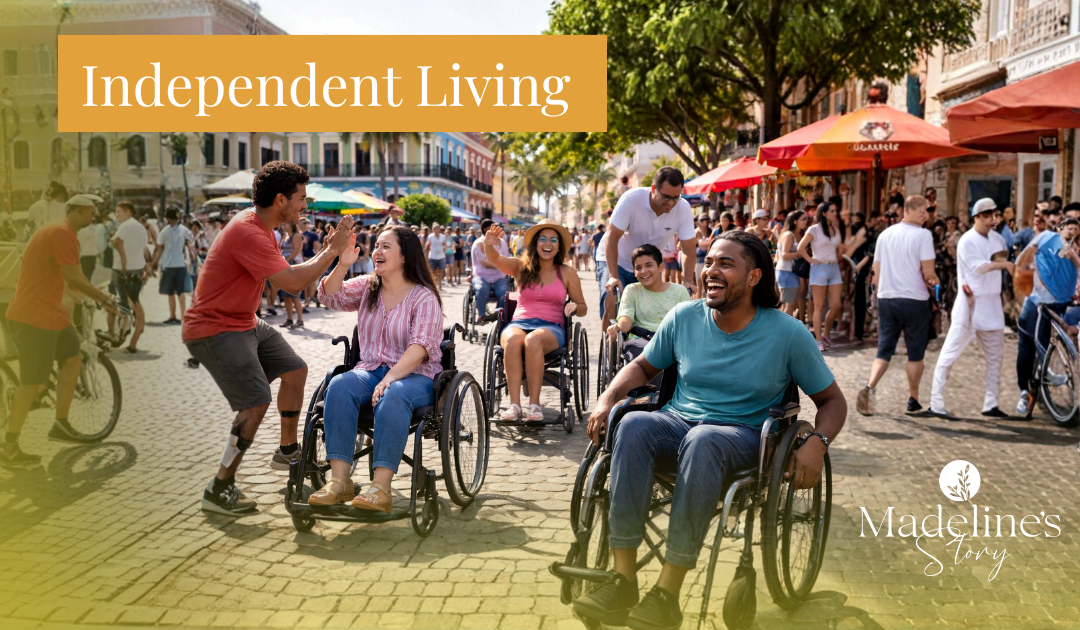
Independent Living is more than a concept or a program. It is a philosophy rooted in dignity, choice, and the fundamental belief that people with disabilities have the right to direct their own lives.
For many, the term is misunderstood. Independent Living does not mean doing everything alone. It does not mean rejecting support, care, or community. Instead, it means having control, autonomy, and self-determination—the ability to decide how support is used, where one lives, and how life is shaped.
At its core, Independent Living affirms that disability does not diminish a person’s value, voice, or capacity to participate fully in society.
What Independent Living Really Means
Independent Living is based on the idea that people with disabilities are the best experts on their own lives. It emphasizes:
Personal choice and self-direction
Access to information and resources
Control over services and supports
Participation in community life
Respect for dignity and individuality
Using support—whether through caregivers, assistive technology, or community services—does not make someone less independent. Independence is defined by who makes the decisions, not by the absence of help.
This philosophy challenges outdated models that place people with disabilities in passive roles. Independent Living centers the person, not the system.
A Brief History of the Independent Living Movement
The Independent Living movement emerged in the United States during the 1960s and 1970s, alongside broader civil rights movements. At that time, people with disabilities were often institutionalized, excluded from education, employment, and community life, and denied basic autonomy.
A pivotal moment came at the University of California, Berkeley, where a group of students with disabilities began advocating for accessible housing, transportation, and campus services. These students rejected the idea that disability required segregation or dependency.
They demanded access—not charity.
The Founders and Early Leaders
One of the most influential figures in the Independent Living movement was Ed Roberts, often called the father of the Independent Living movement. After contracting polio, Roberts used a wheelchair and a respirator. Despite significant physical limitations, he fought for admission to UC Berkeley and later became a powerful advocate for disability rights.
Alongside other activists, Roberts helped establish the first Center for Independent Living (CIL) in Berkeley in 1972. These centers were revolutionary because they were run by people with disabilities, for people with disabilities.
The movement was built on the belief that:
Disabled people should lead disability services
Lived experience is expertise
Advocacy and peer support are essential
This philosophy spread nationally and internationally, shaping disability policy, accessibility laws, and community-based services.
Independent Living as a Civil Rights Issue
Independent Living is deeply connected to civil rights. It laid the groundwork for major legislation, including:
The Rehabilitation Act of 1973
The Americans with Disabilities Act (ADA) of 1990
These laws recognized that barriers are often created by environments, policies, and attitudes—not by disability itself.
Independent Living reframes disability as a social issue, not a personal failing. When spaces, systems, and services are accessible, people can live with greater independence and dignity.
Independent Living Today
Today, Independent Living continues to evolve. It addresses not only physical accessibility, but also:
Information access
Digital inclusion
Community participation
Caregiver support
Aging with disability
Mental and emotional well-being
Independent Living also recognizes the vital role of caregivers, families, and allies—while maintaining that the person with a disability remains at the center of decision-making.
CEVI and the Mission of Independent Living in Puerto Rico
In Puerto Rico, the philosophy of Independent Living is advanced through organizations committed to advocacy, education, and empowerment. One of these is CEVI (Consejo Estatal de Vida Independiente).
CEVI works to promote the rights, autonomy, and inclusion of people with disabilities by:
Educating communities about Independent Living
Advocating for accessible policies and environments
Supporting leadership by people with disabilities
Strengthening collaboration between individuals, families, and institutions
As Vice Chair for Independent Living at CEVI, my role is rooted in this same philosophy: ensuring that people with disabilities are not spoken for, but heard; not managed, but respected.
CEVI believes that Independent Living is not a privilege—it is a right.
How We Want to Help
Our mission is to create a culture where people with disabilities can:
Make informed choices
Access support without losing autonomy
Live in their communities with dignity
Be recognized as leaders in their own lives
We also recognize that caregivers, families, and service providers need education, empathy, and resources. Independent Living thrives when communities understand that inclusion benefits everyone.
Through education, advocacy, and lived experience, we aim to reduce barriers—both visible and invisible—and build pathways toward meaningful participation and self-determination.
A Personal Reflection
Independent Living is not an abstract idea for me. It is lived reality.
My journey with disability taught me that independence is not measured by physical ability, but by the freedom to decide, to adapt, and to live with purpose. The Independent Living philosophy gave language to what I already knew in my heart: that dignity and autonomy matter, even in the presence of limitation.
This is why Independent Living remains central to my work, my advocacy, and this space.
Moving Forward With Purpose
Independent Living continues to challenge systems, shift perspectives, and empower individuals. It reminds us that disability is not the end of possibility, but a call to build a more inclusive, thoughtful, and humane society.
When people are supported without being controlled, when accessibility replaces exclusion, and when lived experience guides policy, Independent Living becomes not just a philosophy—but a way forward.
Explore Related Foundations – Independent Living: What It Is and Why It Matters – Lived Experience: Why Our Stories Matter – Wellness, Faith, and Purposeful Living
Foundations
Thank you for taking the time to explore this cornerstone reflection. This page serves as a foundational resource rooted in dignity, lived experience, and purpose.
Written by Madeline
Living with purpose, dignity, and faith.
Madeline Story — a space rooted in lived experience, independent living, faith, and purpose.
When Love Becomes Care, and Faith Becomes Strength
By Madeline Story
Have you ever walked through a park or a shopping mall and noticed a person in a wheelchair, with a caregiver quietly by their side? Topically, most people pass by without a second thought—yet it carries a powerful truth: this can happen to anyone, at any time.
Caregivers of people who lose mobility often begin their journey without warning. One day, life feels familiar and predictable. The next, everything changes—for the person living with the disability and for the family member who suddenly steps into the role of caregiver.
At Madeline Story, we believe it’s important to speak honestly about this reality. We don’t often imagine ourselves in these moments, but the truth is, none of us are immune. Long-term care, especially when mobility is lost, is often carried out by family members—people who were never trained, never prepared, and never expected to take on this role.
If you are here because someone you love now depends on you, pause for a moment. What you’re feeling is real. You may feel overwhelmed—but you do not need to panic. You are not alone.
Where to Begin: Pause, Reflect, Decide
Sometimes the unexpected doesn’t knock—it crashes into your life in a single second.
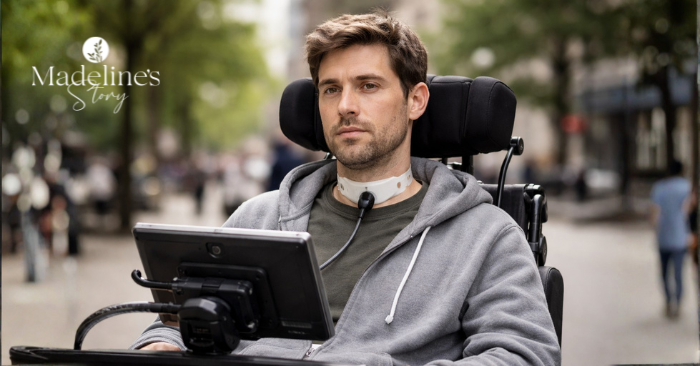
Andrew was a tall, handsome man—about 6 feet 2 inches, with amber eyes and brownish hair—walking through the city on what felt like a completely ordinary day. He passed by a construction site, and at the exact moment he walked underneath, a brick fell from above and struck him directly on the head. One instant split his life into “before” and “after.”
The consequences were devastating. Andrew became totally paralyzed. He could not speak, and he could not breathe on his own. And just like that, his mother’s life changed too. Without warning, without a handbook, she became his caregiver—his advocate, his strength, his steady presence through a reality neither of them asked for.
But even in a world that flipped overnight, love began to rebuild hope in small, patient steps.
At the Assistive Technology (AT) center, someone placed a tiny switch on Andrew’s finger—a simple thread-like sensor that could detect the smallest movement. With time, training, and relentless care, that tiny motion became a “yes” to life. They paired it with a keyboard scanner and macros—basic pre-set phrases and word prediction that helped him form sentences faster. And then something incredible happened: the technology began to speak what his body could not. Thoughts became words. Words became conversations. Conversations brought tears that turned into smiles—because for the first time after the accident, Andrew’s voice returned in a new way.
His world had changed, but those little steps became hope.
When mobility loss enters a family, fear and urgency can take over. It can feel like a death or a deep loss—and it is okay to cry. Just not for too long, because time is the one thing we can’t repeat. There comes a moment when, even through grief, you realize you must begin making decisions. Questions come fast. Responsibilities multiply. Emotions rise.
But the first step is not to rush. The first step is to pause.
Take a breath. Reflect. Then make decisions—one at a time.
Caregiving is not about perfection. It is about presence. It’s about learning as you go, and allowing yourself to receive support—especially in the beginning.
When Mobility Is Lost, and Family Becomes Caregivers
People who lose mobility through an accident or degenerative disease. The family often requires long-term or lifelong care. This care includes physical support, medical coordination, emotional presence, and advocacy.
In most cases, the primary caregiver is a family member—a mother, father, spouse, sibling, or child—who must learn how to care for another human being while still managing their own life.
This is when caregivers begin living two lives at once, and this point can’t be ignored.
The visible life includes:
Daily routines and physical assistance
Medical appointments and treatments
Safety, feeding, mobility, and care coordination
The invisible life carries:
Emotional exhaustion
Fear of the future
Grief for what has changed
Deep love and constant responsibility
Living two lives is heavy—but it does not mean you are weak. It means you are human. My personal opinion is to write everything in the agenda. It’s about positioning everything to encounter new paths or directions, because if the person loses the mobility and has the capacity to make decisions, it’s just about helping to guide them temporarily until you let them go.
Emotional Health: Caring for the Caregiver
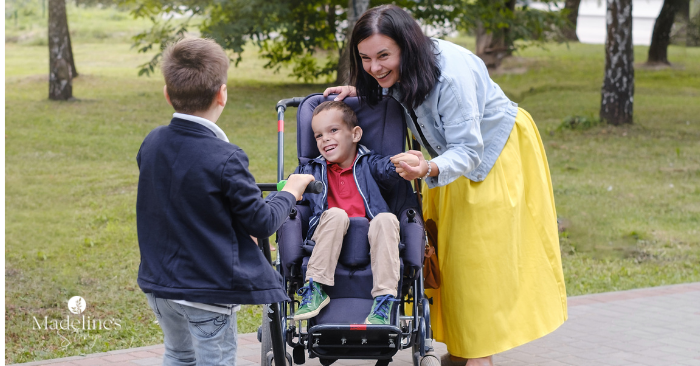
Caregiving is found in everyday moments—supporting independence, connection, and joy.
Caregivers are often expected to be strong without rest, calm without fear, and knowledgeable without training.
But emotional health matters.
Support is not optional—it is essential. Being heard is healing. Faith, reflection, and community help carry what feels too heavy to hold alone.
At Madeline Story, we believe caregivers deserve care too.
Learning as You Go: Education Brings Peace
One key point for caregivers to avoid the sense of hopelessness for most caregivers are not prepared ahead of time. Learning happens in real life—through doctors’ offices, hospital rooms, support groups, and daily challenges. Understanding what is happening and what will happen, learn about the diagnosis, medications, what to expect, with all information about existing opportunities of independent living, extra help from home care, therapies if needed, technology, and others can reduce fear. Knowledge builds confidence.
Start by learning step by step enough. You are allowed to grow into this role and allow to teach others.
Strength and Faith: Steady Anchors
Strength is not something caregivers choose—it grows through love.
In the Bible, faith is the confident trust in God’s character, promises, and presence—even when circumstances are uncertain or outcomes are unseen. Scripture defines faith clearly in Hebrews 11:1, which says: “Now faith is the assurance of things hoped for, the conviction of things not seen.” This verse teaches that faith is not denial of reality, but a deep inner certainty that God is at work beyond what our eyes can perceive. Faith is important because it anchors the heart when fear arises, gives strength to endure hardship, and allows hope to exist in moments of waiting or pain. To believe is to place trust not in our own control, but in God’s faithfulness—knowing that He walks with us through suffering, sustains us in weakness, and brings purpose even in the most difficult seasons of life. Faith does not remove difficulty, but it brings grounding, hope, and purpose. Faith reminds us that:
God is present
Life still has meaning
Healing may look different—but it is still real
Faith gives us peace when answers are incomplete.
My Story: Living With Mobility Loss, Living With Purpose
Madeline Story is about truth and hope, and when I was 22 years old, I was diagnosed with ALS. Doctors told me I would live no more than two years. I spent a month at the Colombian Presbyterian Hospital in New York, terrified and convinced my life was ending. I cried for a long time because I thought my life was over, according to the diagnosis.
The memories are still vivid for the sense of loss and fear. Everything was so sudden without any anticipation. At that time, my plans were like every young person who had just become 21: marriage, children, studies, work, travel, etc, were grounded. All I could do was cry uncontrollably until one day, at the hospital, I asked my mom, “Is it true, I’m going to die? And she looked into my eyes and said, “No, and I’ll stay with you to support you until the end.”
This is how my mother became my first caregiver. She became my number one caregiver—my advocate, my strength, my shield. She chose faith over fear. My part was to make a solid decision to believe.
Today, I use a wheelchair—but my health is better by the day. I feel better by the day. I am a living miracle. I have overcome the fear of death. I can breathe because at that time I used to breathe with oxygen, then a bypass machine, and now it’s perfect. I can move my neck. I can eat again, even with challenges.
I am still here—with faith and purpose.
I remember this moment clearly. I was young, healthy, and walking freely along the rocky coast of Calella de la Costa in Spain. At that time, life felt open and full of certainty in ways we often take for granted when we are young. I never imagined that this would be one of the last places I would walk without limitation, or that my life would soon take a path I could not yet understand.
When illness later entered my life, I truly believed my world was ending. Fear, uncertainty, and long hospital stays replaced everything I once knew. Yet in the midst of that darkness, God was already at work — quietly strengthening me through His promises and surrounding me with unwavering love. My mother became my first caregiver, standing beside me when I felt unable to stand on my own. When doctors spoke in timelines, she spoke in faith. When my hope felt fragile, hers remained firm.
Looking back at this photograph now, I do not feel sadness. I feel gratitude. Gratitude first to God, who sustained me when I could not see the way forward, and gratitude for my mother, whose love, courage, and presence carried me through seasons I never expected to survive. This image reminds me that walking is not the only measure of freedom.
My Hero: My Mother
I have the privilege of writing about my hero—my mom. She has lived two lives for years. She has carried love, responsibility, and faith without recognition. She is proof that caregivers are heroes—quiet, faithful, and strong.
I know there are many heroes like my mother.
Heroes who need:
Encouragement
A hug
Words of strength
God is good. God is real. And He walks with caregivers and families every step of the way. Believe!
A Short Prayer for Caregivers
God of strength and compassion, Hold every caregiver who feels tired today. Give them peace where there is fear, strength where there is exhaustion, and hope where answers feel distant. Remind them they are not alone. Amen.
Thank you for being here. I hope this reflection offered encouragement, clarity, or a moment of peace.
— Madeline
Madeline Story — a space rooted in lived experience, independent living, faith, and purpose.
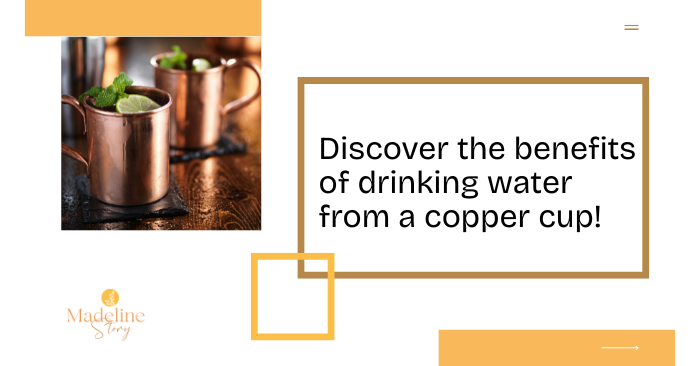
I came across the practice of drinking water from a copper cup and glass bottles, which is another topic that interests me, while reading about simple wellness habits rooted in tradition. It caught my attention not because of bold promises, but because of how quiet and intentional it felt.
This practice comes from ancient traditions, particularly Ayurveda, where water stored in copper vessels—known as tamra jal—was believed to support balance and overall well-being. In recent years, it has resurfaced as more people look for gentle, mindful habits that support health without pressure or extremes.
So I wanted to ask the honest question: What does tradition say, what does science actually support, and what does this mean in real life—especially for brain health and everyday wellness?
That’s what this article explores, without hype or misinformation.
What Is Copper and Why Does the Body Need It?
Copper is an essential trace mineral that the human body needs in small amounts. It plays a role in several important biological processes, including:
Energy production
Iron metabolism
Formation of connective tissue
Nervous system function
Antioxidant defense
From a scientific perspective, copper is required for enzymes that help protect cells from oxidative stress and support normal brain and nerve function. Most of our copper intake comes from food, but very small amounts can also be absorbed through water stored in copper vessels.
The keyword here is small. Copper is beneficial in trace amounts, not in excess.
The Science Behind Copper-Infused Water
When water is stored in a copper cup for several hours, trace amounts of copper ions may leach into the water. Research has shown that copper has antimicrobial properties, meaning it can help reduce certain bacteria in water.
Scientific studies have demonstrated that copper surfaces can inactivate microbes such as E. coli and Salmonella. This is one reason copper has been studied in hospital environments and public health settings.
That said, it’s important to be clear: Copper water does not replace modern water treatment or medical care. It may offer a supportive benefit when used responsibly.
Potential Benefits of Drinking Water From a Copper Cup
1. Supports Brain and Nervous System Function
Copper is involved in the production of neurotransmitters and the maintenance of myelin, the protective sheath around nerves. Adequate copper levels support:
Brain signaling
Cognitive function
Nervous system health
Some research suggests that copper imbalance—either too little or too much—can affect brain health. Using a copper cup occasionally, alongside a balanced diet, may help gently support healthy copper intake.
2. Antioxidant and Cellular Protection
Copper is a component of the enzyme superoxide dismutase (SOD), which helps neutralize free radicals. Oxidative stress is associated with aging and neurological decline.
By supporting antioxidant activity, copper plays a role in cellular protection, including cells in the brain.
3. Digestive and Metabolic Support
Traditional medicine has long associated copper water with digestive balance. Scientifically, copper contributes to:
Enzyme activation
Nutrient metabolism
Iron absorption
Proper iron metabolism is important for oxygen delivery and energy levels, which also support brain function.
4. Antimicrobial Properties
Copper’s natural antimicrobial action may help reduce bacterial growth in stored water. Again, this is supportive, not a substitute for safe drinking water practices.
5. Encourages Mindful Hydration
One benefit that often gets overlooked is the habit itself.
Drinking from a copper cup encourages:
Pausing
Drinking slowly
Being more aware of hydration
Mindful hydration can positively affect:
Energy levels
Focus
Headaches
Overall well-being
Sometimes, the ritual is part of the benefit.
What Science Does Not Support
It’s important to be responsible and clear.
There is no scientific evidence that copper water:
Cures diseases
Detoxifies organs
Reverses neurological conditions
Replaces medical treatment
Copper cups should be seen as a wellness practice, not a medical intervention.
Safety and Best Practices
If you choose to use a copper cup, here are safe guidelines:
Use pure, food-grade copper
Store water for 6–8 hours, not days
Drink 1–2 cups per day, not all your water
Clean occasionally with lemon and salt
Avoid if you have copper metabolism disorders (such as Wilson’s disease)
As with many wellness practices, moderation matters.
Who May Benefit Most
This practice may appeal to:
People interested in mindful wellness
Those focusing on brain and nervous system health
Caregivers seeking gentle, low-effort routines
Individuals exploring traditional practices with modern awareness
Choosing a Copper Cup for Mindful Hydration
If you’re curious about trying this practice, the most important thing is choosing a pure, food-grade copper cup. Not all copper products are created equally; quality matters for both safety and long-term use.
When looking for a copper cup, I recommend paying attention to the following:
Made from 100% pure copper
Labeled as food-grade
Simple, uncoated design (no interior lining)
Easy to clean and maintain
Well-reviewed by verified buyers
I’ve included a link to a well-reviewed copper cup on Amazon for those who prefer a trusted, accessible option to choose from Amazon which I consider trustworthy. (This article may contain affiliate links. If you choose to purchase through them, it helps support Madeline Story at no extra cost to you.)
Classic Copper Cups
Moscow Mule Copper Mugs – Pure Copper, 16 oz – This one my very favorite choice, and can be a perfect gift! View on Amazon: https://amzn.to/4jwluSv
Gift Set Pure Copper Hammered Mugs with Copper Straws & Wooden Coasters Set of 4 – PREMIUM QUALITY -16 Oz Copper Mug – 100% Handcrafted – A Gift Pack for your loved Ones. View on Amazon https://amzn.to/4bliO82
Premium / Gift-Style Options
Moscow Mule Copper Mugs – Unique HANDCREFTED Gift Set of 2, Hammered by Artisan, 100% Pure Solid Copper Cups 16oz for Drinking Water & Cocktails, Includes 18 Pcs accessories & Special Opener – View on Amazon https://amzn.to/4sleETR
My Final Thoughts
Drinking water from a copper cup is a simple, intentional habit rooted in tradition and supported by limited but meaningful scientific evidence. It is not a cure or treatment, but it may support adequate intake of trace minerals, antimicrobial action, and mindful hydration.
The keyword here is small. Copper is beneficial in trace amounts, not in excess. That’s why drinking water from a copper cup should be done mindfully and in moderation, not all day or every day without guidance. The traditional practice usually involves storing water in a copper vessel overnight and drinking a small amount in the morning, allowing the water to absorb minimal copper ions. However, because everyone’s body chemistry is different—and excess copper can cause adverse effects—it’s important to approach this habit responsibly. Before starting, take a blood test to determine your current copper levels, and consult your doctor afterward to review the results. This ensures that using a copper cup supports your health rather than creating an imbalance, especially if you have existing conditions or take supplements that may already affect mineral levels.
When approached with balance, awareness, and purpose, this practice can become a small yet meaningful part of a calm, intentional lifestyle. Sometimes, wellness isn’t about adding more — it’s about choosing thoughtfully.