
Caregivers of Long-Term Mobility Loss
When Love Becomes Care, and Faith Becomes Strength
By Madeline Story
Have you ever walked through a park or a shopping mall and noticed a person in a wheelchair, with a caregiver quietly by their side? Topically, most people pass by without a second thought—yet it carries a powerful truth: this can happen to anyone, at any time.
Caregivers of people who lose mobility often begin their journey without warning. One day, life feels familiar and predictable. The next, everything changes—for the person living with the disability and for the family member who suddenly steps into the role of caregiver.
At Madeline Story, we believe it’s important to speak honestly about this reality. We don’t often imagine ourselves in these moments, but the truth is, none of us are immune. Long-term care, especially when mobility is lost, is most often carried by family members—people who were never trained, never prepared, and never expected this path.
If you are here because someone you love now depends on you, pause for a moment. What you’re feeling is real. You may feel overwhelmed—but you do not need to panic. You are not alone.
Where to Begin: Pause, Reflect, Decide
Sometimes the unexpected doesn’t knock—it crashes into your life in a single second.
Andrew was a tall, handsome man—about 6 feet 2 inches, with amber eyes and brownish hair—walking through the city on what felt like a completely ordinary day. He passed by a construction site, and at the exact moment he walked underneath, a brick fell from above and struck him directly on the head. One instant split his life into “before” and “after.”
The consequences were devastating. Andrew became totally paralyzed. He could not speak, and he could not breathe on his own. And just like that, his mother’s life changed too. Without warning, without a handbook, she became his caregiver—his advocate, his strength, his steady presence through a reality neither of them asked for.
But even in a world that flipped overnight, love began to rebuild hope in small, patient steps.
At the Assistive Technology (AT) center, someone placed a tiny switch on Andrew’s finger—a simple thread-like sensor that could detect the smallest movement. With time, training, and relentless care, that tiny motion became a “yes” to life. They paired it with a keyboard scanner and macros—basic pre-set phrases and word prediction that helped him form sentences faster. And then something incredible happened: the technology began to speak what his body could not. Thoughts became words. Words became conversations. Conversations brought tears that turned into smiles—because for the first time after the accident, Andrew’s voice returned in a new way.
His world had changed, but those little steps became hope.
When mobility loss enters a family, fear and urgency can take over. It can feel like a death or a deep loss—and it is okay to cry. Just not for too long, because time is the one thing we can’t repeat. There comes a moment when, even through grief, you realize you must begin making decisions. Questions come fast. Responsibilities multiply. Emotions rise.
But the first step is not to rush.
The first step is to pause.
Take a breath. Reflect. Then make decisions—one at a time.
Caregiving is not about perfection. It is about presence. It’s about learning as you go, and allowing yourself to receive support—especially in the beginning.
When Mobility Is Lost, and Family Becomes Caregivers
People who lose mobility through an accident or degenerative disease. The family often requires long-term or lifelong care. This care includes physical support, medical coordination, emotional presence, and advocacy.
In most cases, the primary caregiver is a family member—a mother, father, spouse, sibling, or child—who must learn how to care for another human being while still managing their own life.
This is when caregivers begin living two lives at once, and this point can’t be ignored.
The visible life includes:
- Daily routines and physical assistance
- Medical appointments and treatments
- Safety, feeding, mobility, and care coordination
The invisible life carries:
- Emotional exhaustion
- Fear of the future
- Grief for what has changed
- Deep love and constant responsibility
Living two lives is heavy—but it does not mean you are weak. It means you are human. My personal opinion is to write everything in the agenda. It’s about positioning everything to encounter new paths or directions, because if the person loses the mobility and has the capacity to make decisions, it’s just about helping to guide them temporarily until you let them go.
Emotional Health: Caring for the Caregiver
Caregivers are often expected to be strong without rest, calm without fear, and knowledgeable without training.
But emotional health matters.
Support is not optional—it is essential.
Being heard is healing.
Faith, reflection, and community help carry what feels too heavy to hold alone.
At Madeline Story, we believe caregivers deserve care too.
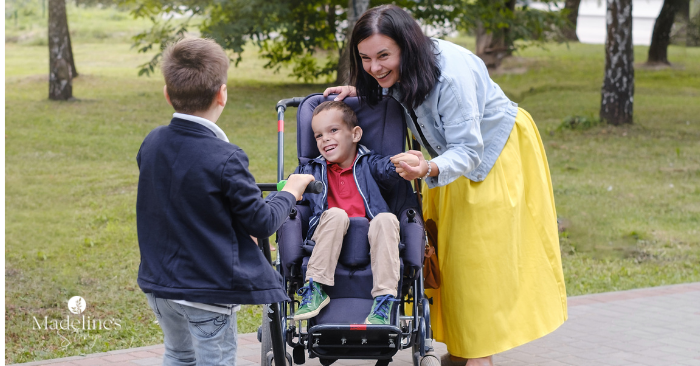
Learning as You Go: Education Brings Peace
One key point for caregivers to avoid the sense of hopelessness for most caregivers are not prepared ahead of time. Learning happens in real life—through doctors’ offices, hospital rooms, support groups, and daily challenges. Understanding what is happening and what will happen, learn about the diagnosis, medications, what to expect, with all information about existing opportunities of independent living, extra help from home care, therapies if needed, technology, and others can reduce fear. Knowledge builds confidence.
Start by learning step by step enough. You are allowed to grow into this role and allow to teach others.
Strength and Faith: Steady Anchors
Strength is not something caregivers choose—it grows through love.
In the Bible, faith is the confident trust in God’s character, promises, and presence—even when circumstances are uncertain or outcomes are unseen. Scripture defines faith clearly in Hebrews 11:1, which says: “Now faith is the assurance of things hoped for, the conviction of things not seen.” This verse teaches that faith is not denial of reality, but a deep inner certainty that God is at work beyond what our eyes can perceive. Faith is important because it anchors the heart when fear arises, gives strength to endure hardship, and allows hope to exist in moments of waiting or pain. To believe is to place trust not in our own control, but in God’s faithfulness—knowing that He walks with us through suffering, sustains us in weakness, and brings purpose even in the most difficult seasons of life. Faith does not remove difficulty, but it brings grounding, hope, and purpose. Faith reminds us that:
- God is present
- Life still has meaning
- Healing may look different—but it is still real
Faith gives us peace when answers are incomplete.
My Story: Living With Mobility Loss, Living With Purpose
Madeline Story is about truth and hope, and when I was 22 years old, I was diagnosed with ALS. Doctors told me I would live no more than two years. I spent a month at the Colombian Presbyterian Hospital in New York, terrified and convinced my life was ending. I cried for a long time because I thought my life was over, according to the diagnosis.
The memories are still vivid for the sense of loss and fear. Everything was so sudden without any anticipation. At that time, my plans were like every young person who had just become 21: marriage, children, studies, work, travel, etc, were grounded. All I could do was cry uncontrollably until one day, at the hospital, I asked my mom, “Is it true, I’m going to die? And she looked into my eyes and said, “No, and I’ll stay with you to support you until the end.”
This is how my mother became my first caregiver. She became my number one caregiver—my advocate, my strength, my shield. She chose faith over fear. My part was to make a solid decision to believe.
Today, I use a wheelchair—but my health is better by the day. I feel better by the day. I am a living miracle. I have overcome the fear of death. I can breathe because at that time I used to breathe with oxygen, then a bypass machine, and now it’s perfect. I can move my neck. I can eat again, even with challenges.
I am still here—with faith and purpose.
My Hero: My Mother
I have the privilege of writing about my hero—my mom. She has lived two lives for years. She has carried love, responsibility, and faith without recognition. She is proof that caregivers are heroes—quiet, faithful, and strong.
I know there are many heroes like my mother.
Heroes who need:
- Encouragement
- A hug
- Words of strength
God is good.
God is real.
And He walks with caregivers and families every step of the way. Believe!
A Short Prayer for Caregivers
God of strength and compassion,
Hold every caregiver who feels tired today.
Give them peace where there is fear,
strength where there is exhaustion,
and hope where answers feel distant.
Remind them they are not alone.
Amen.