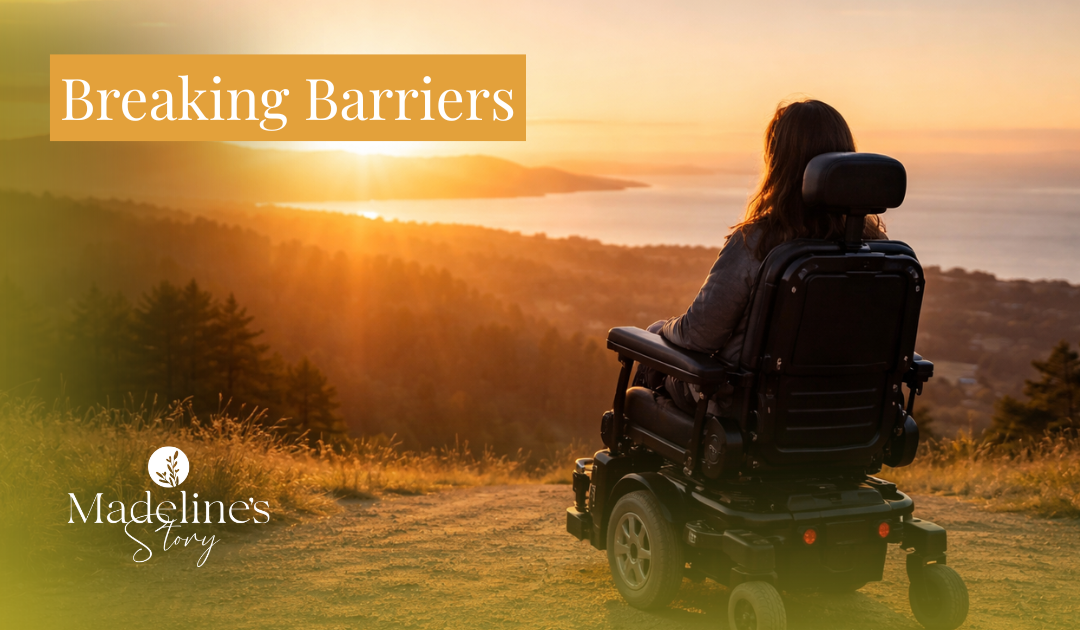
There are moments in life when everything changes in an instant. A diagnosis, an accident, or a sudden shift in health can divide life into two parts: before and after. For many people living with disabilities, that moment can feel like the end of the life they once knew. But in reality, it can also become the beginning of a new kind of strength.
Breaking barriers is not always about dramatic victories or public achievements. Sometimes it is quieter than that. It happens in the daily decision to keep going, to keep learning, and to keep believing that your life still has purpose and value.
For many people with disabilities, the greatest barriers are not always physical. Ramps can be built, and doors can be widened. But attitudes, assumptions, and misunderstandings can be much harder obstacles to overcome. Too often, society confuses disability with inability. Too often, people assume that a person with a disability has less to offer, less to contribute, or less independence.
Yet history shows the opposite.
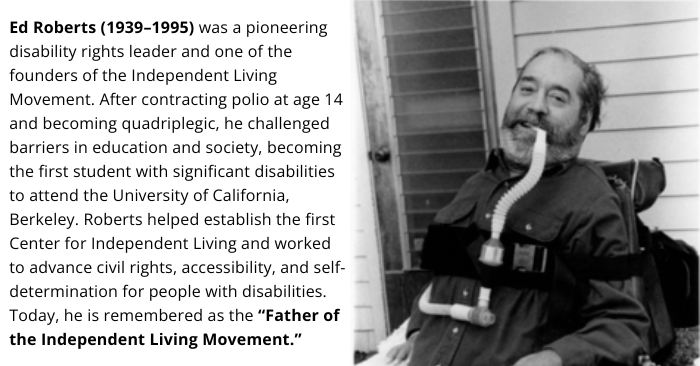
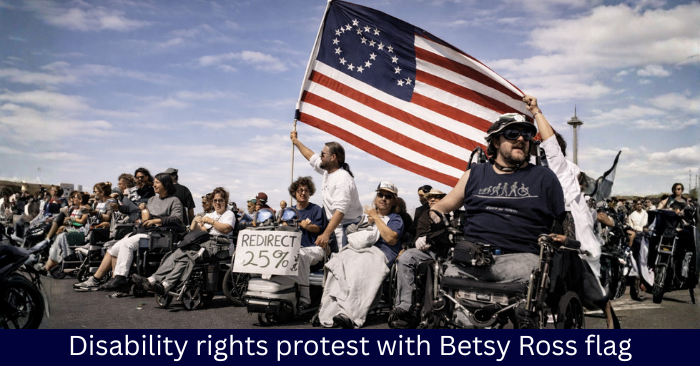
People with disabilities have always been leaders, innovators, thinkers, artists, and advocates. They have helped shape laws, transform communities, and redefine what independence means. The Independent Living Movement, inspired by leaders like Ed Roberts, changed the way society understands disability—not as a tragedy, but as a natural part of human diversity.
Breaking barriers also happens internally. It happens when a person refuses to accept the limits others place on them. It happens when someone decides to speak up, share their story, and live authentically even when the road is difficult.
Living with a disability often means becoming stronger in ways the world cannot easily see. It means developing resilience, creativity, patience, and courage. These qualities grow through challenges, and they shape a deeper understanding of life and humanity.
For me, breaking barriers is about more than overcoming obstacles. It is about changing the narrative. It is about showing me first that people with disabilities are not defined by what they cannot do, but about possibilities by the powerful lives they continue to build with purpose because we opening doors for others.
Every accessible ramp, every inclusive classroom, every workplace that values diversity, and every voice that speaks out for dignity and equality is part of breaking barriers.
But perhaps the most important barrier to break is the one inside our own minds—the belief that our dreams must end because our circumstances changed.
They do not.
Life may take a different path than we imagined, but it can still be full of purpose, impact, and meaning.
Breaking barriers is not about proving something to the world.
It is about living fully, courageously, and unapologetically as who we are.
And every step forward—no matter how small—is a victory.
Madeline Story — a space rooted in lived experience, independent living, faith, and purpose.
✨ At Madeline Story, we believe lived experience is knowledge, resilience is strength, and every voice has the power to inspire change.
Lived experience is more than a personal story. It is knowledge shaped by real life, real barriers, real resilience, and real choice. For people with disabilities, caregivers, and advocates, lived experience is often the clearest lens through which systems, policies, and environments can be understood.
Too often, decisions about disability are made without the voices of those most affected. The philosophy of lived experience challenges that pattern. It reminds us that people are not problems to be solved, but experts in their own lives.
What Is Lived Experience?
Lived experience refers to the knowledge gained through direct, personal experience rather than through theory, observation, or assumption. In the disability community, lived experience includes navigating accessibility barriers, healthcare systems, education, employment, caregiving relationships, and daily life with a disability.
This kind of knowledge cannot be fully captured in reports or statistics. It is learned through living — through adaptation, advocacy, loss, resilience, and growth.
Lived experience does not replace professional expertise. Instead, it complements it, grounding policies and services in reality rather than abstraction.
Why Lived Experience Matters
When lived experience is ignored, systems fail the people they are meant to serve. When it is centered, solutions become more humane, effective, and inclusive.
Lived experience matters because it:
Reveals gaps that data alone cannot show
Highlights unintended consequences of policies
Identifies barriers that may seem invisible to others
Brings dignity and humanity into decision-making
Most importantly, it restores agency. It shifts people from being spoken about to being spoken with — and ultimately, being heard.
Lived Experience and Disability Rights
The disability rights movement has always been shaped by lived experience. Many of the most significant advances in accessibility, independent living, and civil rights were led by people who directly experienced exclusion and discrimination.
This is why the Independent Living movement emphasized leadership by people with disabilities. It recognized that lived experience is not biased — it is insight.
Civil rights laws, accessibility standards, and community-based services have been strengthened because individuals shared their stories, challenged assumptions, and demanded inclusion.
Lived Experience Is Not One Story
It is important to recognize that lived experience is not universal or identical. Disability intersects with culture, race, gender, age, geography, faith, and socioeconomic status. Each person’s experience is shaped by their environment and the supports available to them.
This diversity does not weaken lived experience — it strengthens it. It reminds us that inclusion must be flexible, respectful, and responsive, not rigid or one-size-fits-all.
Listening to lived experience means listening to many voices, not just the most visible ones.
The Role of Caregivers and Families
Caregivers also carry lived experience. Supporting a loved one with a disability often means navigating medical systems, emotional challenges, financial strain, and daily responsibilities that are rarely visible to the outside world.
Recognizing caregiver experience does not diminish the autonomy of the person with a disability — it enriches the conversation and strengthens community understanding.
Lived Experience and Leadership
When people with lived experience are included in leadership roles, organizations and systems become more responsive and ethical. Policies shaped by lived experience are more likely to respect dignity, autonomy, and real-world needs.
Leadership grounded in lived experience:
Reduces harmful assumptions
Encourages accountability
Builds trust with communities
Promotes sustainable solutions
This is why lived experience belongs not only in storytelling but in advocacy, governance, and education.
A Personal Reflection
For me, lived experience is not an abstract concept — it is my daily reality. Living with a disability has taught me that strength often looks like adaptation, that independence can coexist with support, and that purpose is not defined by physical ability.
There were moments when others predicted limits for my life, moments shaped by fear or misunderstanding. Yet through experience, faith, and perseverance, I learned that lived experience carries truth that no diagnosis can erase.
My story is one among many, but it is a reminder that lived experience holds wisdom — not despite challenges, but because of them.
Lived Experience and Purpose
Lived experience invites reflection. It asks us to slow down, listen deeply, and recognize that every person carries insight shaped by their journey. When combined with compassion, education, and faith, lived experience can become a source of healing, advocacy, and meaningful change.
Purpose often emerges not from comfort, but from the lessons learned in difficult seasons. Lived experience helps transform those lessons into guidance for others.
Moving Forward With Intention
Honoring lived experience means creating space — in conversations, institutions, and communities — for real voices to shape real outcomes. It means understanding that inclusion is not symbolic, but practical and ongoing.
When lived experience is respected, people are not reduced to labels or conditions. They are recognized as whole individuals with insight, value, and agency.
This is not only good practice — it is a foundation for dignity, justice, and meaningful inclusion.
Thank you for being here. I hope this reflection offered encouragement, clarity, or a moment of peace.
Madeline Story — a space rooted in lived experience, independent living, faith, and purpose.
Independent Living is more than a concept or a program. It is a philosophy rooted in dignity, choice, and the fundamental belief that people with disabilities have the right to direct their own lives.
For many, the term is misunderstood. Independent Living does not mean doing everything alone. It does not mean rejecting support, care, or community. Instead, it means having control, autonomy, and self-determination—the ability to decide how support is used, where one lives, and how life is shaped.
At its core, Independent Living affirms that disability does not diminish a person’s value, voice, or capacity to participate fully in society.
What Independent Living Really Means
Independent Living is based on the idea that people with disabilities are the best experts on their own lives. It emphasizes:
Personal choice and self-direction
Access to information and resources
Control over services and supports
Participation in community life
Respect for dignity and individuality
Using support—whether through caregivers, assistive technology, or community services—does not make someone less independent. Independence is defined by who makes the decisions, not by the absence of help.
This philosophy challenges outdated models that place people with disabilities in passive roles. Independent Living centers the person, not the system.
A Brief History of the Independent Living Movement
The Independent Living movement emerged in the United States during the 1960s and 1970s, alongside broader civil rights movements. At that time, people with disabilities were often institutionalized, excluded from education, employment, and community life, and denied basic autonomy.
A pivotal moment came at the University of California, Berkeley, where a group of students with disabilities began advocating for accessible housing, transportation, and campus services. These students rejected the idea that disability required segregation or dependency.
They demanded access—not charity.
The Founders and Early Leaders
One of the most influential figures in the Independent Living movement was Ed Roberts, often called the father of the Independent Living movement. After contracting polio, Roberts used a wheelchair and a respirator. Despite significant physical limitations, he fought for admission to UC Berkeley and later became a powerful advocate for disability rights.
Alongside other activists, Roberts helped establish the first Center for Independent Living (CIL) in Berkeley in 1972. These centers were revolutionary because they were run by people with disabilities, for people with disabilities.
The movement was built on the belief that:
Disabled people should lead disability services
Lived experience is expertise
Advocacy and peer support are essential
This philosophy spread nationally and internationally, shaping disability policy, accessibility laws, and community-based services.
Independent Living as a Civil Rights Issue
Independent Living is deeply connected to civil rights. It laid the groundwork for major legislation, including:
The Rehabilitation Act of 1973
The Americans with Disabilities Act (ADA) of 1990
These laws recognized that barriers are often created by environments, policies, and attitudes—not by disability itself.
Independent Living reframes disability as a social issue, not a personal failing. When spaces, systems, and services are accessible, people can live with greater independence and dignity.
Independent Living Today
Today, Independent Living continues to evolve. It addresses not only physical accessibility, but also:
Information access
Digital inclusion
Community participation
Caregiver support
Aging with disability
Mental and emotional well-being
Independent Living also recognizes the vital role of caregivers, families, and allies—while maintaining that the person with a disability remains at the center of decision-making.
CEVI and the Mission of Independent Living in Puerto Rico
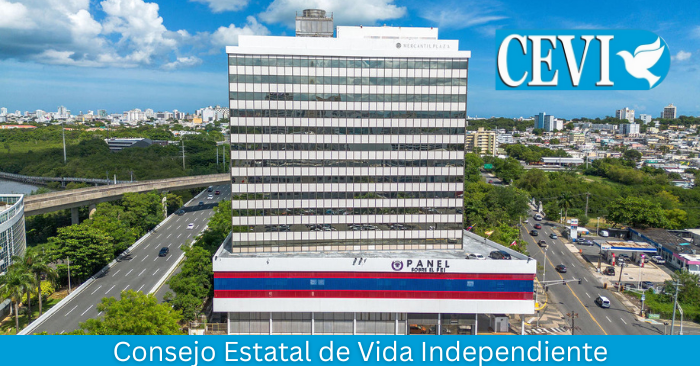
In Puerto Rico, the philosophy of Independent Living is advanced through organizations committed to advocacy, education, and empowerment. One of these is CEVI (Consejo Estatal de Vida Independiente).
CEVI works to promote the rights, autonomy, and inclusion of people with disabilities by:
Educating communities about Independent Living
Advocating for accessible policies and environments
Supporting leadership by people with disabilities
Strengthening collaboration between individuals, families, and institutions
As Vice Chair for Independent Living at CEVI, my role is rooted in this same philosophy: ensuring that people with disabilities are not spoken for, but heard; not managed, but respected.
CEVI believes that Independent Living is not a privilege—it is a right.
How We Want to Help
Our mission is to create a culture where people with disabilities can:
Make informed choices
Access support without losing autonomy
Live in their communities with dignity
Be recognized as leaders in their own lives
We also recognize that caregivers, families, and service providers need education, empathy, and resources. Independent Living thrives when communities understand that inclusion benefits everyone.
Through education, advocacy, and lived experience, we aim to reduce barriers—both visible and invisible—and build pathways toward meaningful participation and self-determination.
A Personal Reflection
Independent Living is not an abstract idea for me. It is lived reality.
My journey with disability taught me that independence is not measured by physical ability, but by the freedom to decide, to adapt, and to live with purpose. The Independent Living philosophy gave language to what I already knew in my heart: that dignity and autonomy matter, even in the presence of limitation.
This is why Independent Living remains central to my work, my advocacy, and this space.
Moving Forward With Purpose
Independent Living continues to challenge systems, shift perspectives, and empower individuals. It reminds us that disability is not the end of possibility, but a call to build a more inclusive, thoughtful, and humane society.
When people are supported without being controlled, when accessibility replaces exclusion, and when lived experience guides policy, Independent Living becomes not just a philosophy—but a way forward.
Explore Related Foundations – Independent Living: What It Is and Why It Matters – Lived Experience: Why Our Stories Matter – Wellness, Faith, and Purposeful Living
Foundations
Thank you for taking the time to explore this cornerstone reflection. This page serves as a foundational resource rooted in dignity, lived experience, and purpose.
Written by Madeline
Living with purpose, dignity, and faith.
Madeline Story — a space rooted in lived experience, independent living, faith, and purpose.
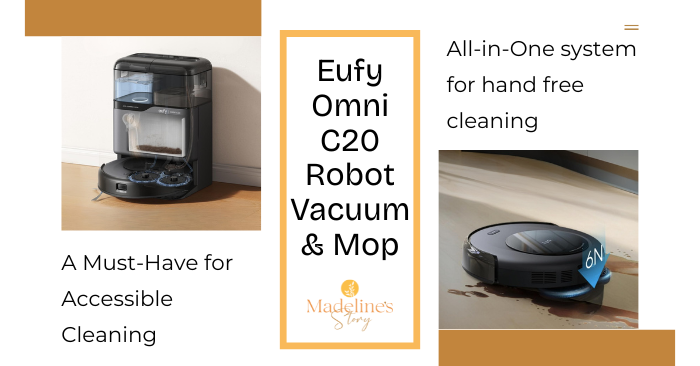
Eufy Omni C20 Robot Vacuum & Mop — A Must-Have for Accessible Cleaning
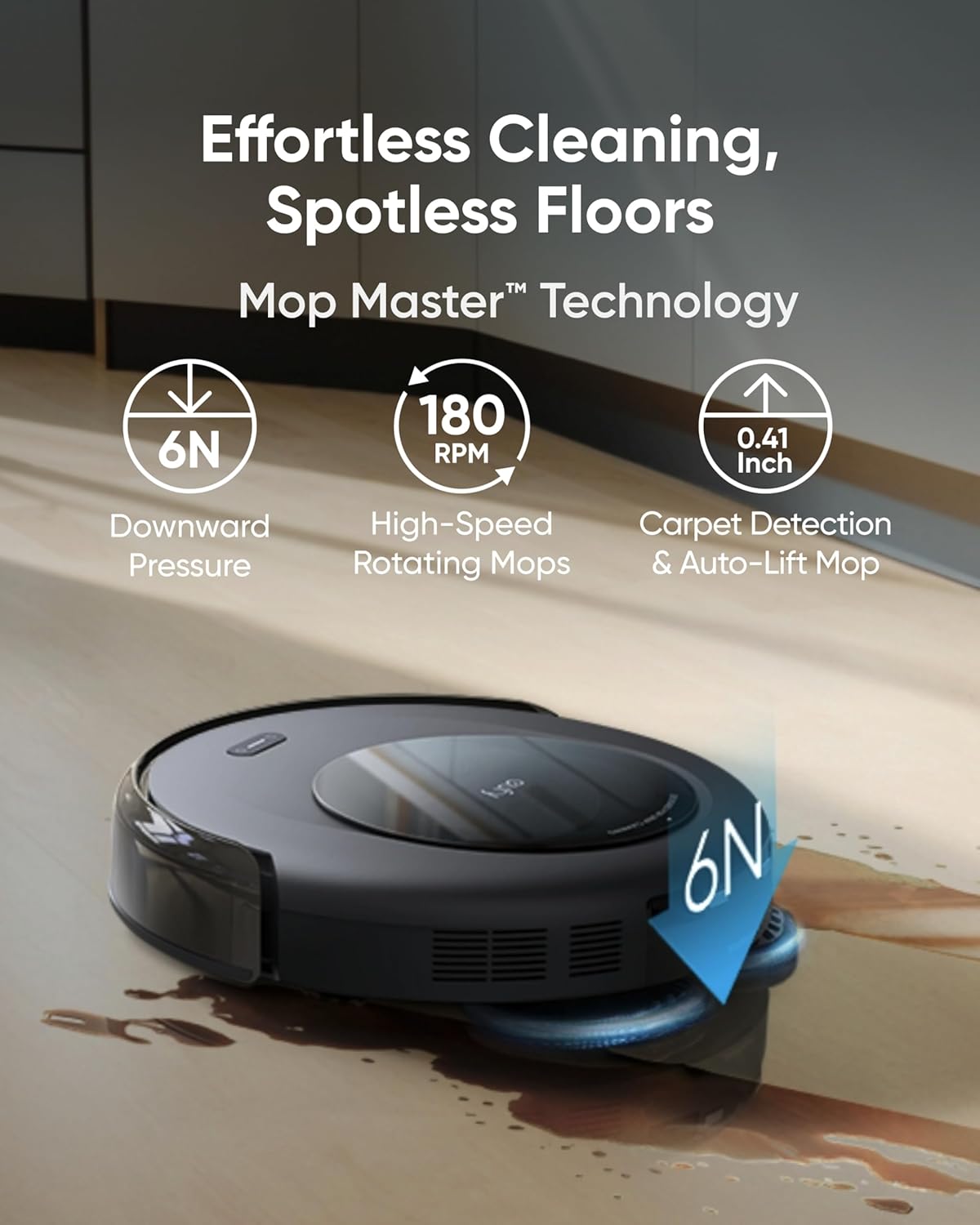
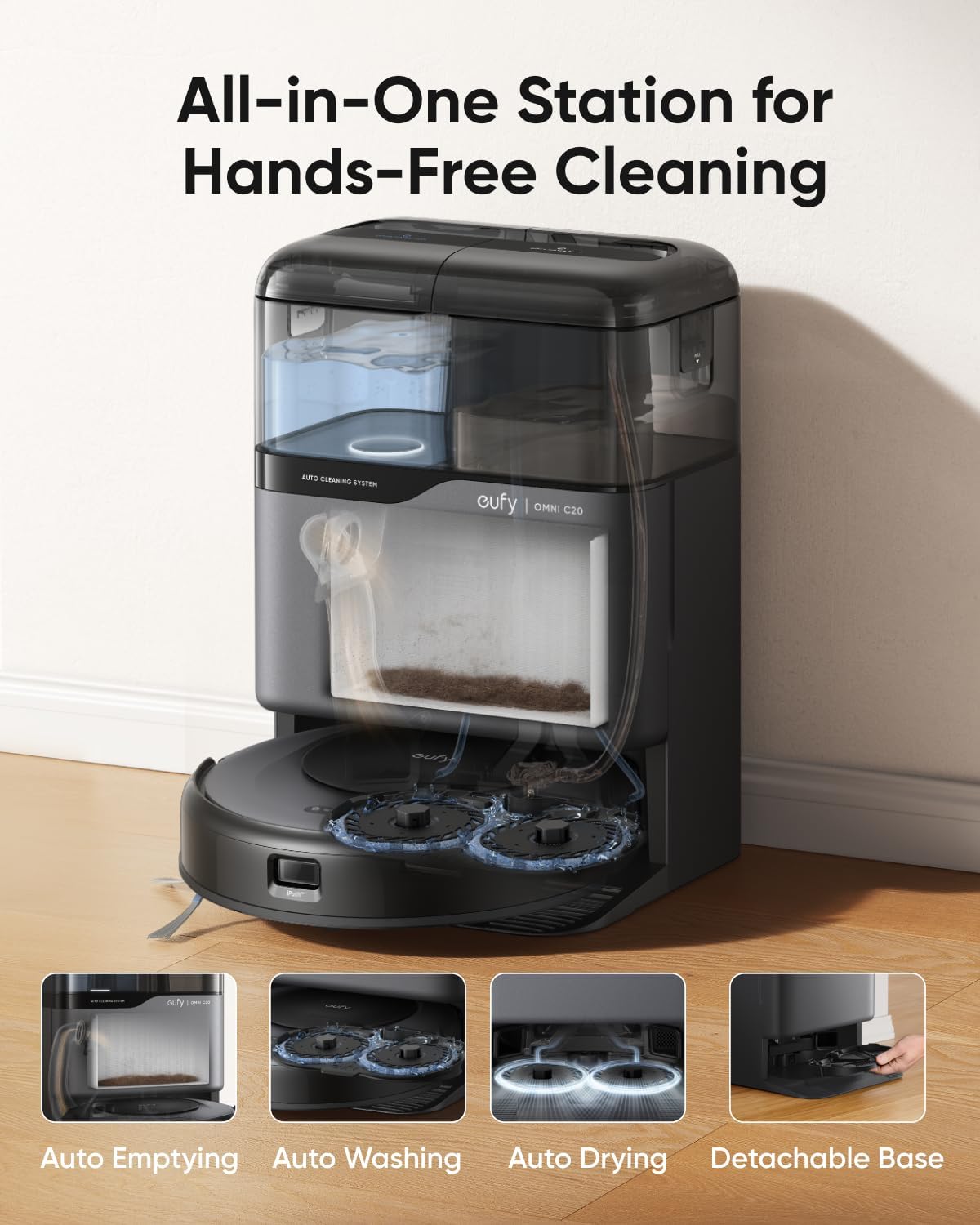
The Eufy Omni C20 Robot Vacuum and Mop Combo is a game-changing acquisition for anyone with a disability or limited mobility. With 7000 Pa of powerful suction, auto mop washing and drying, and a self-emptying station, it delivers a true hands-free cleaning experience. At only 3.35 inches tall, it easily fits under beds, sofas, and tight spaces you can’t reach yourself. For those of us who use a wheelchair, experience chronic pain, or rely on limited mobility, this smart device removes the burden of daily sweeping and mopping — it’s like having a cleaner that works for you, every day, without needing to bend, lift, or push anything.
Today, it’s an extraordinary 53% OFF, making it one of the most affordable and powerful all-in-one robot systems available.
👉 Don’t miss this accessibility-boosting deal! Transform your home into a cleaner, safer, low-effort space with the Eufy Omni C20. Grab yours now while it’s still 53% OFF: 👉 https://amzn.to/49PRa2z
¿Buscas añadir un toque de elegancia, estilo en tu vida y al mismo tiempo mejorar su salud? ¡Entonces aqui puede ver los diferentes vasos de cobre y buscar cual es el perfectos para ti!
One of the most important reasons I share experiences like this is that information matters. My first doorbell was a Ring — it looked great, worked well, and is widely recommended. However, over time, I realized that “working” is not the same as being accessible. Certain features required physical interaction or quick responses that did not fully support my mobility needs.
If I had known more about accessibility considerations before purchasing, I would have made a different choice from the start. That’s why sharing real-life experiences is so important. What works for one person may not work for another, and when it comes to accessibility, small design differences can have a big impact on independence and daily life.
By sharing this information, I hope others can make more informed, thoughtful decisions — especially people with disabilities and caregivers who rely on technology to support safety, autonomy, and peace of mind. After my difficult experience with my first Ring doorbell, I researched doorbells that support hardwired power, have no battery hassle, and accessibility-friendly features.
That’s how I found the Tapo D225 Smart Video Doorbell, and instantly, it checked every box I needed.
Why the Tapo D225 Is a Perfect Match For My Accessibility Needs
1. Hardwired Power = No More Battery Drama
When I purchased my first smart doorbell, I never imagined how much the battery would affect my daily life. I didn’t think about who would recharge it for me, how often it would need charging, or that using all the features would drain the battery even faster. And the truth is, if I missed the warning or couldn’t get someone to help in time, the doorbell would die — and I could miss a visitor, a delivery, or something important. What should have given me peace of mind turned into constant worry and dependence. This is the biggest blessing.
Once installed:
No removal
No waiting for help
No downtime
It gives me permanent independence.
2. “Ring Call” is disability-friendly
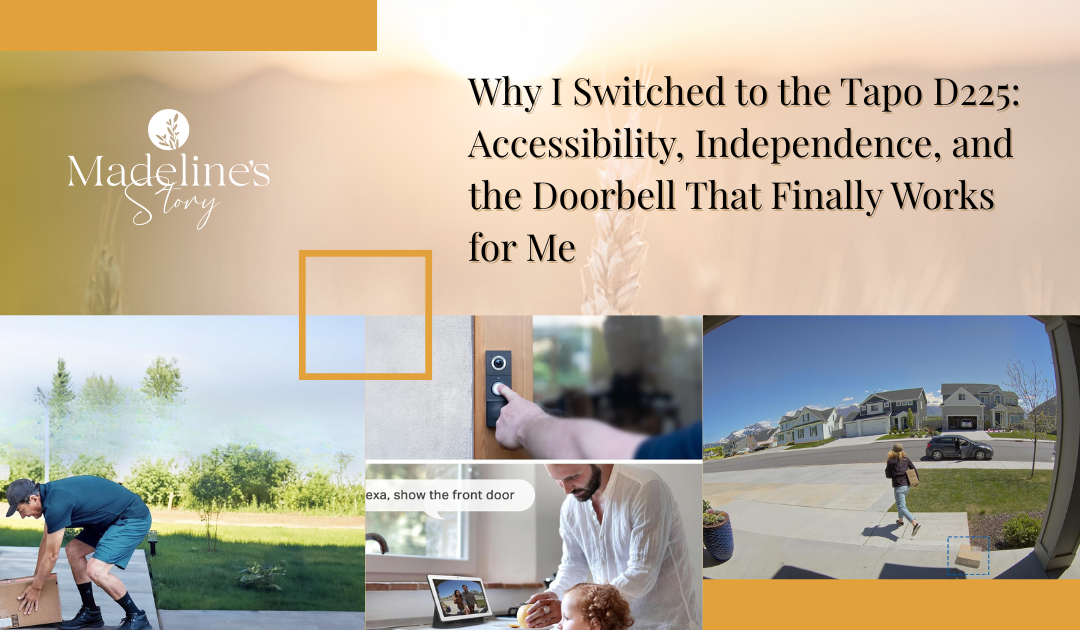
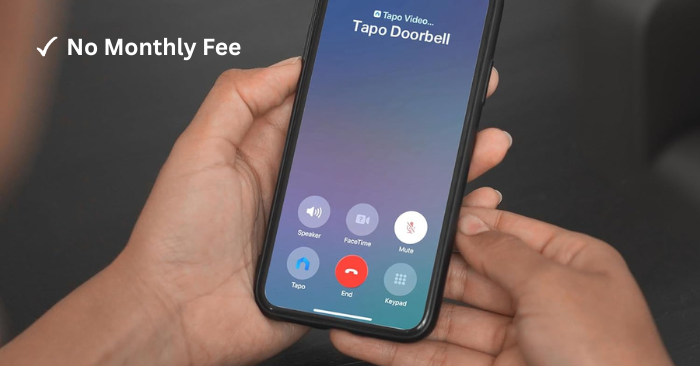
What makes the Tapo D225 even more amazing is that I can receive a real phone call the moment someone presses the doorbell. My phone rings just like a regular call, and all I have to do is swipe to answer — no opening apps, no searching for notifications, no delays. For me, that’s independence. It means I can talk to the person at my door immediately, even if I’m in another room, tired, or can’t move quickly. This simple feature gives me safety, confidence, and peace of mind. When someone presses the doorbell:
👉 My phone rings like a call I swipe to answer. THAT’S IT.
No notifications to hunt, no screens to open, no delays — just a simple, dignified solution.
3. Works with Alexa
It also works beautifully with Alexa, which is a huge advantage for me. With just my voice, I can ask Alexa to show the front door, and instantly, I can see the person through the camera and even talk to them. I don’t have to rush, move, or struggle to reach my phone. It gives me control, comfort, and the ability to communicate with anyone at my door — all hands-free and fully accessible. I can say:
“Alexa, show the front door.”
Instead of rolling to the door, I check it hands-free. Check up the Alexa devices: https://amzn.to/48veTmj
4. No monthly fees needed
With Ring, even though you buy the hardware, you still have to pay a monthly subscription to access the full functionality — starting at about US $5/month or nearly US $50/year just for one doorbell. For someone with limited mobility like me, that ongoing cost — plus the hassle of removing the battery, waiting for someone to recharge it, and hoping it doesn’t die at the wrong moment — turns something that was supposed to give me independence into another burden. It became a reminder of what I couldn’t do, rather than the support I needed. Unlike Ring, Tapo offers:
Free AI detection
Local microSD recording
No forced subscription
Ring vs Tapo D225 — REAL Comparison for People With Disabilities
Smart Video Doorbell Comparison Table
Feature
Ring Doorbell
Tapo D225 Smart Doorbell
Power Source
Battery (must remove & recharge)
Hardwired — NO battery ever
Accessibility
Difficult for mobility limitations (battery removal, multiple app steps)
People with disabilities, seniors, busy caregivers, accessibility needs
saves money AND reduces stress.
5. Head-to-toe view helps me see everything
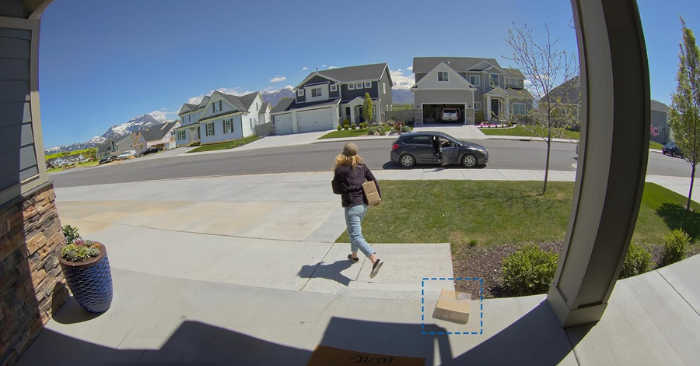
One of the features I value the most is the 180° head-to-toe view, because it truly helps me see everything that matters from my wheelchair. With traditional doorbell cameras, the angle is limited — sometimes you can see the person, but you can’t see what they’re holding, what’s at their feet, or whether a package was actually delivered. But with the Tapo D225, I get a full, clear view from top to bottom. I can see visitors, pets, packages, delivery bags, and even my entry ramp. For someone with mobility challenges, that kind of visibility isn’t just convenient — it’s empowering. It gives me the confidence to know exactly what’s happening at my door without having to move, strain, or rely on someone else.